Client case study · AI-enabled trucking SaaS
FleetExpedite.
From customer insight to SaaS growth strategy.
Customer research, positioning, SEO planning, landing-page copy, and App Store creative for a trucking platform serving U.S. owner-operators and small fleets.
- Role
- SaaS Growth & Product Marketing
- Market
- United States
- Engagement
- Ongoing
- Focus
- Customer research · Product positioning · SEO · Landing-page strategy · ASO
Project scope
- Customer personas
- 3
- Keywords researched
- 1,472
- SEO page briefs
- 15
- App Store visuals
- 7
01 The context
A complex product, explained through everyday needs.
FleetExpedite brings together several parts of running a trucking business, including loads, dispatch, routes, fuel, documents, and financial visibility. Its audience needs to understand how those capabilities fit into a working day and what makes the platform useful.
The marketing work focused on connecting product capabilities with the needs of owner-operators, small fleet owners, and dispatchers, then carrying that understanding into search, landing pages, outreach, and app-store presentation.
I developed research, strategy, copy, and creative materials across those touchpoints, using AI-assisted workflows to support research synthesis and production.
02 Customer research
Understanding three different working realities.
The research separated three audiences with different responsibilities, pressures, and reasons to consider the product.
Owner-operators
Need a clearer view of trip costs and earnings, less paperwork, and tools that fit a demanding schedule.
Small fleet owners
Need visibility across drivers, expenses, and workflows as their operations become more complex.
Dispatchers
Need organized load information, dependable communication, and fewer manual steps.
These profiles informed the messaging around financial clarity, simpler operations, and control. They also helped shape content topics, landing-page priorities, and the benefits emphasized in creative work.
03 Brand & product positioning
Giving product features a clear business meaning.
The brand review examined the website, social presence, competitor communication, and the way product benefits were explained. I used those findings to develop messaging around the practical needs of smaller trucking businesses.
The resulting communication framework connected load management with better-informed decisions, financial tools with clearer business visibility, and digital documents with less administrative work.
This provided a consistent basis for landing-page copy, content ideas, outreach messages, and App Store visuals.
- Load and route information
- Better-informed trip decisions
- Financial tools
- Clearer visibility into business performance
- Digital documents
- Less manual administration
04 SEO & content strategy
Turning competitor research into a content plan.
I consolidated competitor keyword research into a deduplicated set of 1,472 keywords and organized the research by relevance, topic, and potential content use.
The work included topic clusters, proposed page structures, metadata recommendations, and 15 page briefs. A phased six-month roadmap connected those recommendations with implementation and measurement tasks.
The plan considered both direct product demand and supporting educational content, with attention to the relationship between search intent and the platform’s capabilities.
- 01Research
- 02Classification
- 03Page planning
- 04Implementation roadmap
05 Landing-page strategy
Building the message around useful decisions.
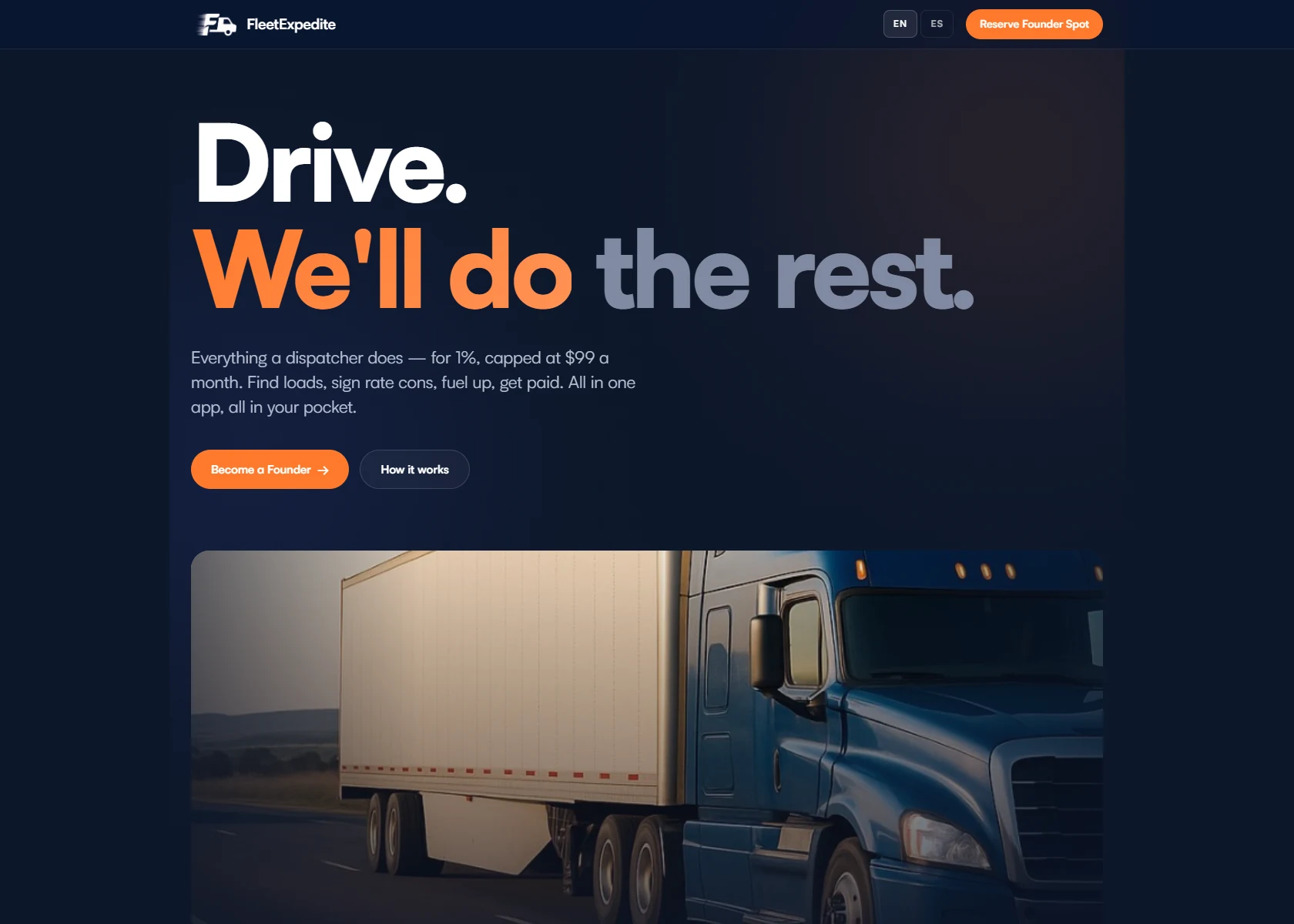
The landing-page strategy organized the offer into a clear sequence: recognize the customer’s problem, explain the relevant benefit, show the product’s role, and provide a clear next step.
I prepared headline directions, benefit sections, feature explanations, and calls to action. The copy focused on understanding costs, organizing daily work, and reducing time spent switching between disconnected tools.
The deliverable was a page structure and copy framework for implementation and testing.
06 ASO & app presentation
Making the app easier to discover and understand.
The app marketing work included App Store keyword research, proposed metadata, promotional text, and a structured product description.
I also created a set of marketing visuals in Canva using supplied product screens. Each visual connects a specific task in the app with a clear benefit, helping prospective users understand the product before downloading it.
I supported Apple Ads setup as part of the wider app marketing work.
01 / 07: AI load matching
AI load matching
Presenting load recommendations through a clear product benefit.
07 Acquisition support
Supporting focused acquisition work.
Alongside the strategy and creative work, I used Apollo.io and AI-assisted research to identify bookkeeping professionals serving trucking businesses as potential outreach and partnership contacts.
I organized prospect information, prepared outreach messaging, and supported TikTok Ads audience and lead-form setup.
This work applied the same customer understanding across organic discovery, app presentation, and targeted acquisition activities.
08 Deliverables
What I delivered.
- Customer profiles and three audience personas.
- Brand and competitor analysis.
- Product positioning and messaging concepts.
- Keyword research and SEO content planning.
- Fifteen SEO page briefs and a phased roadmap.
- Landing-page structure and conversion copy.
- App Store keyword and metadata recommendations.
- Seven App Store marketing visuals.
- B2B prospect research and acquisition setup support.
The project connects research with practical marketing materials across web, search, outreach, and app-store touchpoints. Work is ongoing.